The Untamed Giant of the South
Ruaha National Park is Tanzania’s largest national park and a true wilderness destination. Located in the center of the country, it is far from the main tourist circuits, ensuring a raw and exclusive safari experience. It is a landscape of rugged hills, open plains, and massive Baobab trees, all centered around the Great Ruaha River.
Ruaha is an ecological crossroads where the southern and eastern African flora and fauna meet. This unique position results in an incredible diversity of species that is found in few other places on the continent.
A Global Stronghold for Lions
Ruaha is famously home to approximately 10% of the world’s remaining wild lion population. The park’s prides are often exceptionally large, sometimes numbering over 20 individuals, and they are known for their formidable hunting skills. It is also one of the best places in Tanzania to see the endangered African Wild Dog and the elusive Leopard.
Where the Oryx Meets the Kudu
Because of its transitional location, Ruaha is the only place where you can see both the Greater Kudu (a southern species) and the Lesser Kudu (an eastern species) in the same park. It is also a haven for the beautiful Sable and Roan antelopes, as well as the Grant’s Gazelle.
The Great Ruaha River
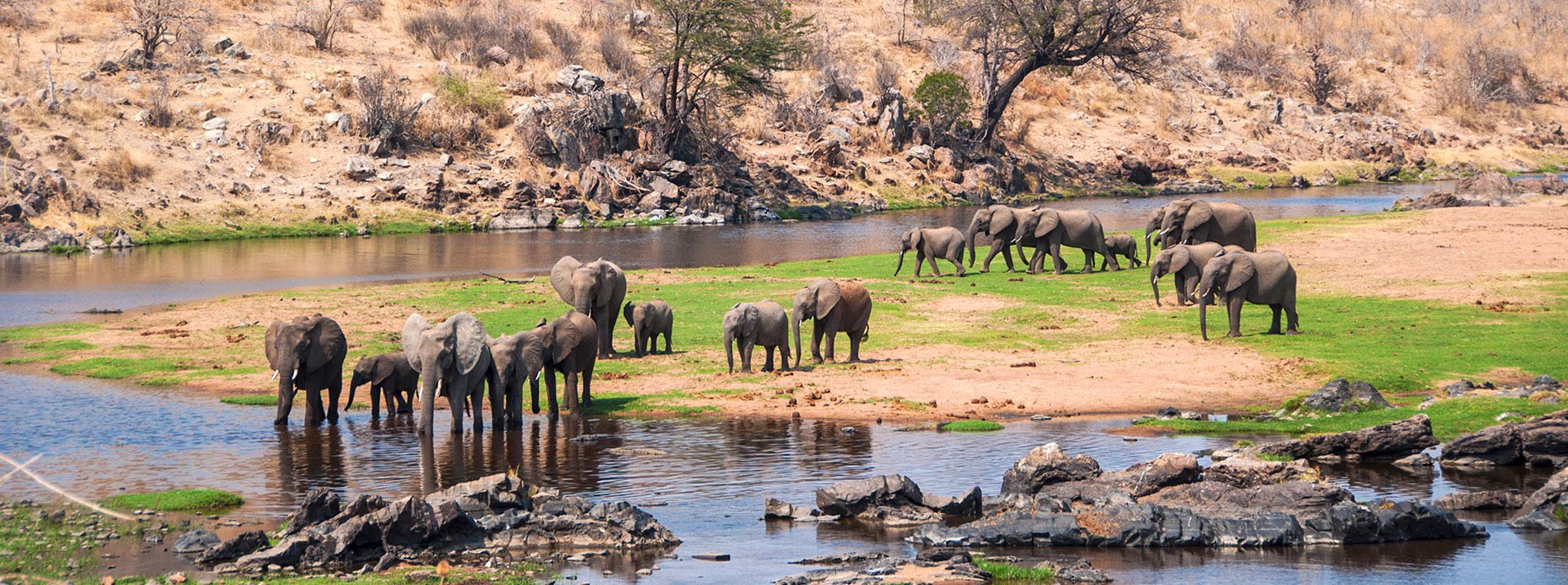
The river is the park’s lifeblood. In the height of the dry season, the river recedes into a series of precious pools, which become magnets for thousands of elephants, buffalos, and giraffes. The riverbanks are also a prime location for watching predator-prey interactions as the big cats lie in wait for the thirsty herds.
The Untamed Wilderness of the Great Ruaha
Ruaha National Park is Tanzania’s largest and most rugged national park, a vast wilderness that feels completely untouched by the modern world. Its name comes from the ‘Ruvaha’ River (meaning ‘river’ in the local Hehe language), which defines the park’s eastern boundary. The landscape is a spectacular mix of rugged hills, open savannah plains, and massive ancient baobab trees. Because of its remote location in the center of the country, Ruaha receives a fraction of the visitors found in the northern parks, offering a level of exclusivity and ‘raw’ wilderness that is hard to find elsewhere. It is a place where you can drive for hours without seeing another vehicle, allowing for a truly private and intimate connection with the African bush.
A Global Stronghold for Apex Predators
Ruaha is famously one of the most important lion conservation areas in the world. It is estimated that the park hosts approximately 10% of the entire global wild lion population. The prides here are legendary for their size and their formidable hunting skills, often taking on large prey like buffalos and even giraffes. The park is also a vital sanctuary for the endangered African Wild Dog and the elusive leopard, which thrives in the park’s rocky hills and riverine thickets. For wildlife photographers and enthusiasts, Ruaha offers a high-intensity predator experience, with daily sightings of the ‘big cats’ interacting in their natural environment, far from the crowds of the more popular safari circuits.
The Ecological Crossroads: North Meets South
Ruaha sits at a unique ecological crossroads where the southern and eastern African flora and fauna meet. This results in a fascinating overlap of species. It is the only place in Tanzania where you can see both the Greater Kudu (a southern species) and the Lesser Kudu (an eastern species) in the same habitat. Similarly, the park is home to both the Grant’s Gazelle and the beautiful Sable and Roan antelopes. The birdlife is equally diverse, with over 570 recorded species, including many that are at the northern or southern limit of their range. This ‘meeting of the worlds’ makes Ruaha one of the most biodiverse and scientifically interesting parks in Africa, offering something new and surprising at every turn.
Ancient Giants: The Baobab Forests
The landscape of Ruaha is defined by its massive and ancient Baobab trees. These iconic ‘upside-down’ trees are found in higher concentrations here than perhaps anywhere else in Tanzania. Some of the specimens are truly gargantuan, with trunks that can be over ten meters in diameter. Baobabs are vital to the Ruaha ecosystem; they store water that sustains elephants during the dry season and provide nesting sites for various birds of prey. In the late afternoon light, the silhouettes of these ancient giants against the rugged hills and golden plains create a timeless and powerful image of the African wilderness. Walking among these ancient sentinels gives you a profound sense of the geological and biological history of the continent.