The Sacred Mountain of the Kikuyu
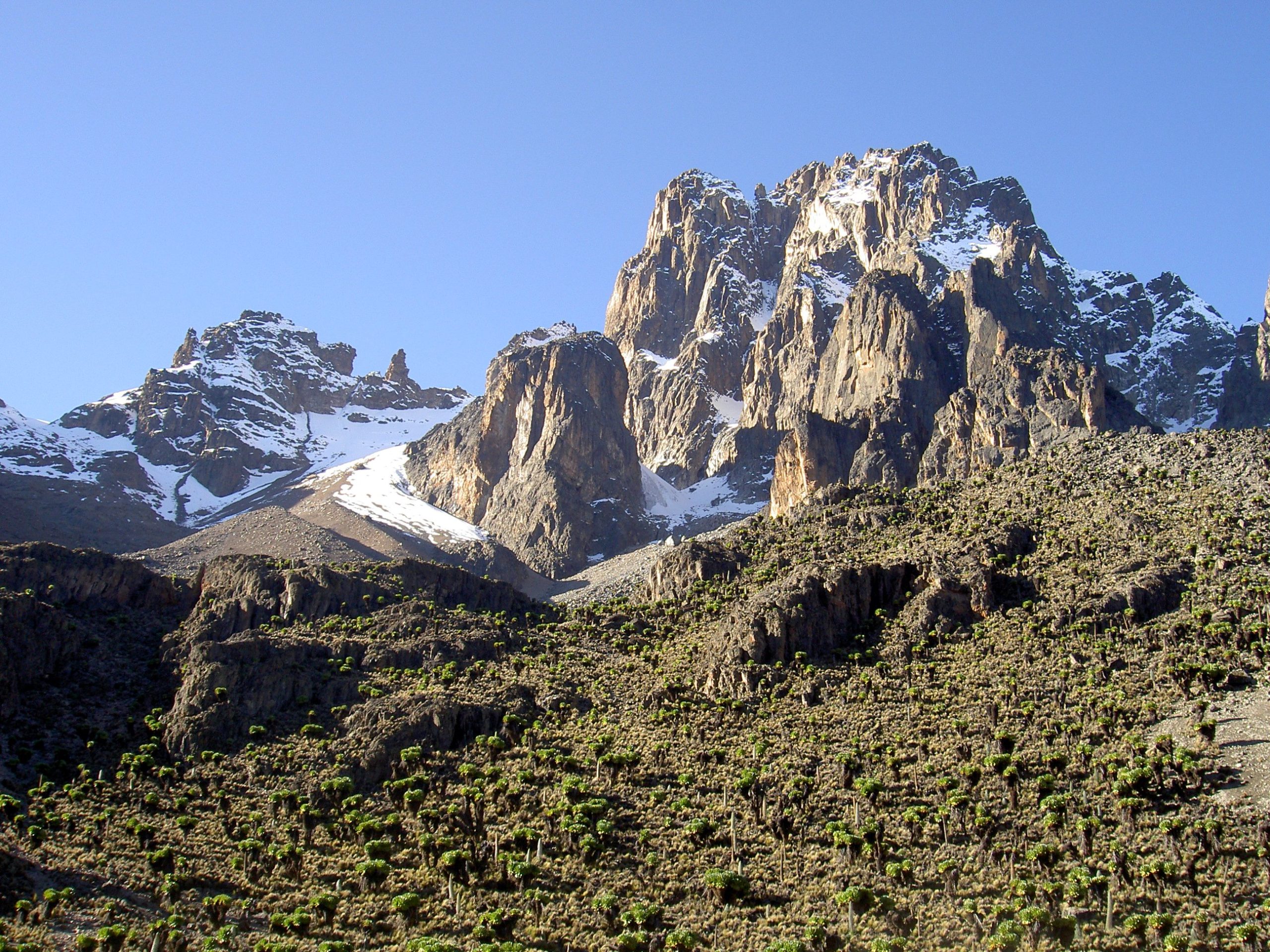
Mount Kenya is the second-highest mountain in Africa and a UNESCO World Heritage site. To the local Kikuyu people, it is “Kirinyaga”—the place of God. Its snow-capped peaks rising above the tropical equator have fascinated travelers for centuries. Unlike the volcanic cone of Kilimanjaro, Mount Kenya is an ancient extinct volcano with jagged, rocky peaks and spectacular alpine lakes.
The national park protects the mountain above the 3,200m contour line, including the surrounding forest reserve. It is a world of dramatic transitions—from lush bamboo forests and giant heather zones to high-altitude Afro-alpine moorlands and permanent glaciers.
The Three Main Peaks
Mount Kenya has three main peaks: Batian (5,199m) and Nelion (5,188m), which require technical rock climbing skills to summit, and Point Lenana (4,985m), which is the primary goal for most hikers. Reaching Point Lenana at dawn to see the sun rise over the clouds of the Kenyan highlands is a spiritual experience for many.
Unique Afro-Alpine Flora
The mountain is home to some of the most surreal plants on Earth. As you climb higher, you encounter Giant Lobelias and Giant Groundsels (Senecios), prehistoric-looking plants that have adapted to the freezing nights and intense tropical sun. These botanical giants create a landscape that feels like it belongs on another planet.
Wildlife of the High Forest
While most visit for the climb, the lower slopes of the park are home to significant wildlife. You can find forest elephants, buffalos, and various primate species like the Sykes and Colobus monkeys. The park is also a vital stronghold for the rare Mountain Bongo and the Giant Forest Hog, though they are elusive and mostly nocturnal at these altitudes.
The High-Altitude Odyssey to Point Lenana
Trekking Mount Kenya is a journey through several distinct ecological worlds. Starting in the lush, bamboo-filled forests where elephants roam, you slowly ascend into the ‘Giant Heather’ zone and finally into the Afro-alpine moorlands. The highlight for most is reaching Point Lenana (4,985m) at dawn. As you make the final scramble in the dark, the temperature drops well below freezing, but the reward is unparalleled. Standing at the summit as the first rays of the sun hit the jagged peaks of Batian and Nelion, lighting up the glaciers and casting a giant shadow of the mountain across the Kenyan plains, is a moment of pure triumph. The descent takes you past crystal-clear alpine tarns like Lake Michaelson, which is widely considered one of the most beautiful spots on the entire continent.
A Botanical Wonderland: The Giants of the Mist
Mount Kenya is home to some of the most bizarre and beautiful plants on Earth. The ‘Afro-alpine’ zone is famous for its ‘botanical giants’—species that have evolved to survive the intense tropical sun by day and freezing temperatures by night. The Giant Lobelias, with their tall, fuzzy spikes, and the Giant Groundsels (Senecios), which look like prehistoric palm trees, create a landscape that feels like it belongs in a science fiction movie. These plants have developed incredible adaptations, such as ‘antifreeze’ fluids in their leaves and the ability to close their rosettes at night to protect their delicate cores. Exploring this misty, high-altitude world is like stepping back millions of years into a lost botanical era.
Technical Climbing: The Peaks of Batian and Nelion
For technical rock climbers, Mount Kenya is the ultimate African challenge. While Point Lenana is a ‘hiker’s summit,’ the two highest peaks—Batian (5,199m) and Nelion (5,188m)—require high-level rock climbing skills and specialized equipment. The routes involve multi-pitch climbs over vertical granite faces and across permanent glaciers. The ‘Diamond Couloir’ and the ‘Standard Route’ on Nelion are legendary among the global climbing community. Achieving these summits is a rare feat that provides an intimate connection with the mountain’s volcanic soul, offering views and a sense of accomplishment that few will ever experience.
Conservation of the High Forest
Mount Kenya is more than just a mountain; it is Kenya’s most important ‘water tower,’ providing the source for two of the country’s largest rivers, the Tana and the Ewaso Ng’iro. Protecting the forest that surrounds the mountain is vital for the survival of millions of people downstream. The national park and the surrounding forest reserve are home to rare and elusive wildlife, including the critically endangered Mountain Bongo, a large and beautiful forest antelope. Conservation efforts here involve local communities in ‘re-forestation’ projects and anti-poaching patrols. By visiting the park, you are supporting the protection of this critical ecosystem, ensuring that the ‘Throne of the Sky’ continues to provide life for the entire nation.