Bwindi Impenetrable National Park is not merely a conservation area; it is a living relic of a prehistoric era. Located in southwestern Uganda, on the edge of the Albertine Rift, this UNESCO World Heritage Site covers 331 square kilometers of ancient, montane, and lowland forest. The name ‘Bwindi’ is derived from the local Rukiga word meaning ‘darkness’—a reference to the impenetrable nature of the forest’s tangled canopy and dense undergrowth. Scientists estimate that this forest is over 25,000 years old, having survived the last ice age, making it one of the most biologically diverse regions on the African continent.
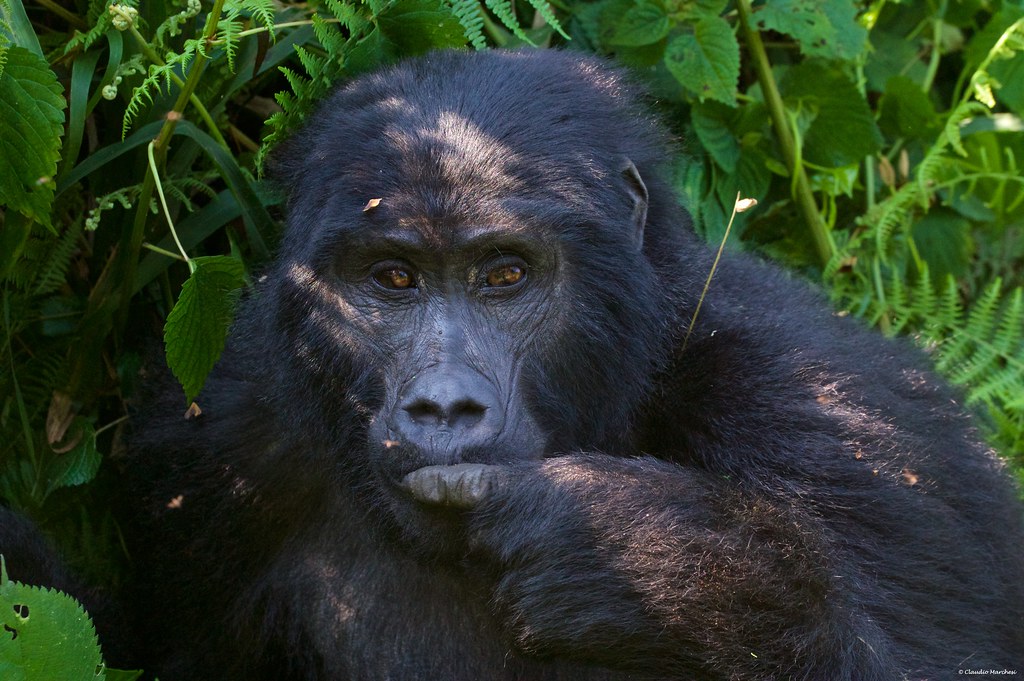
The park is part of the larger Bwindi Impenetrable Forest, which stands as a sanctuary for an extraordinary array of life. It is most famously known for sheltering roughly half of the world’s remaining population of mountain gorillas. There are approximately 459 individuals living within these emerald hills, divided into several dozen families, 18 of which have been habituated for tourism. The experience of trekking through the mist-shrouded valleys to find these gentle giants is often described by travelers as the most profound wildlife encounter on Earth.
While the gorillas are the undisputed stars of the show, Bwindi’s ecological importance extends far beyond primates. The forest is home to at least 120 species of mammals, including forest elephants, several species of small antelopes like the duiker, and various predators such as the African golden cat and the side-striped jackal. It is also a primate paradise, with 10 species residing here, including chimpanzees, L’Hoest’s monkeys, and black-and-white colobus monkeys.
For bird enthusiasts, Bwindi is nothing short of legendary. The park hosts 350 bird species, including 23 species that are endemic to the Albertine Rift. Notable sightings include the African Green Broadbill, the Shelley’s Crimsonwing, and the Grauer’s Broadbill. The diversity of butterflies is equally staggering, with over 220 species recorded, many of which are found nowhere else. The forest’s elevation ranges from 1,160 to 2,607 meters above sea level, creating a variety of micro-climates and vegetation zones that support this incredible density of life.
The terrain of Bwindi is characterized by steep ridges and deep, narrow valleys. The soil is predominantly volcanic in origin, contributing to the lushness of the vegetation. Streams and rivers cut through the forest floor, eventually feeding into the larger river systems of the region. The climate is tropical, with high rainfall occurring throughout much of the year, which maintains the forest’s ‘impenetrable’ character.
Walking through Bwindi is an exercise in sensory immersion. The air is thick with the scent of damp earth and decaying leaves, punctuated by the sharp cries of turacos and the distant drumming of woodpeckers. The canopy is so dense that in many places, only 1% of sunlight reaches the forest floor. This lack of light has led to the evolution of specialized plant species that thrive in the shadows, creating a vertical garden of ferns, mosses, and epiphytes that drape from the massive mahogany and bamboo trees.
The history of Bwindi is deeply intertwined with the Batwa Pygmies, the original ‘Keepers of the Forest.’ For thousands of years, the Batwa lived in harmony with the forest, relying on it for food, medicine, and spiritual connection. However, with the establishment of the national park in 1991, the Batwa were evicted from their ancestral lands to protect the gorillas and the ecosystem.
This complex history has led to modern conservation efforts that focus on ‘Integrated Conservation and Development.’ A portion of the gorilla permit fees is shared with the local communities to fund schools, hospitals, and infrastructure. Cultural tours led by the Batwa allow them to share their ancient traditions—such as honey harvesting, traditional medicine, and storytelling—while generating an income that doesn’t rely on the forest’s resources. This partnership is crucial for the long-term survival of the park, as it ensures that the people living on the borders of the forest see it as a valuable asset rather than a restricted zone.
Gorilla trekking is a physically demanding but spiritually rewarding adventure. The journey begins at the park headquarters with a briefing from the Uganda Wildlife Authority (UWA) rangers. Trekkers are split into small groups of eight and assigned a specific gorilla family. The trek itself can last anywhere from one hour to eight hours, depending on the movement of the gorillas.
The path is often non-existent; rangers use machetes to clear a way through the thick vines and stinging nettles. The slopes can be slippery and steep, requiring a good level of fitness. However, the moment you first lay eyes on a mountain gorilla, the exhaustion vanishes. Watching a silverback—the massive leader of the group—interact with his family, or seeing a young infant tumble through the undergrowth, is a moment of pure connection with our evolutionary cousins. You are allowed exactly one hour in their presence, a limit strictly enforced to minimize stress on the animals.
For those who wish to explore Bwindi further, there are numerous nature walks and hiking trails. The Waterfall Trail leads to the stunning 33-meter Munyaga Falls, while the Mubwindi Swamp Trail is a must for birders. The Ivy River Walk offers a chance to see smaller primates and a variety of colorful butterflies.
Accommodation around Bwindi ranges from luxury eco-lodges perched on the edge of the forest to budget campsites and community-run guesthouses. Most lodges are designed to blend into the environment, offering breathtaking views of the forest canopy. Staying in these lodges contributes directly to the local economy and supports the conservation initiatives that keep Bwindi thriving.
Planning a trip to Bwindi requires foresight. Gorilla permits are highly sought after and often sell out months in advance. The dry seasons—June to August and December to February—are the most popular times to visit, as the trails are easier to manage. However, the wet seasons offer a different kind of beauty, with fewer tourists and a forest that is at its most vibrant green.
Travelers should come prepared with sturdy hiking boots, long-sleeved shirts, and waterproof trousers to protect against nettles and insects. A good camera with a low-light lens is essential for capturing images in the dim forest light. More importantly, visitors should come with an open heart and a respect for the fragile balance of this ancient ecosystem.
Bwindi Impenetrable National Park stands as a testament to the resilience of nature and the importance of conservation. It is a place where time seems to have stood still, allowing us a rare glimpse into the primordial world of our ancestors. To visit Bwindi is not just to go on a safari; it is to go on a pilgrimage to one of the last truly wild places on Earth.