The Ancient Majesty of Nyungwe Forest National Park
Nyungwe Forest National Park is a massive, high-altitude montane rainforest located in the southwestern corner of Rwanda. It is one of the oldest and largest protected rainforests in Africa, covering an area of approximately 1,019 square kilometers. This incredible ecosystem has remained intact since the last Ice Age, making it a unique laboratory for studying evolutionary biology and a vital refuge for countless species that are found nowhere else on earth. The park’s importance to Rwanda and the broader Central African region cannot be overstated; it provides up to 70% of Rwanda’s freshwater through its role as a major water catchment area.
The topography of Nyungwe is characterized by a series of high ridges and deep valleys, ranging in altitude from about 1,600 meters to over 2,900 meters at the peak of Mount Bigugu. This variation in altitude creates a diverse range of microclimates, which in turn support a staggering variety of flora and fauna. As you move from the lower valleys to the mountain peaks, the vegetation changes dramatically, from dense tall-canopy forest to bamboo thickets and eventually to alpine heath and marshes.
A Primate Paradise
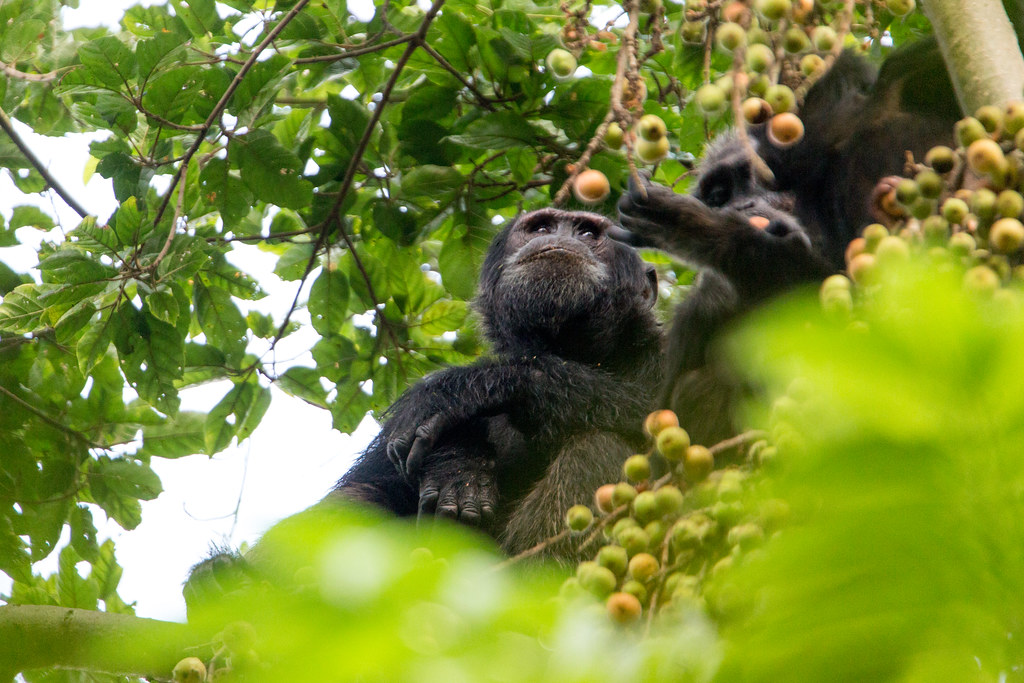
Nyungwe is perhaps most famous for its incredible diversity of primates. The park is home to 13 different species, representing about 25% of all of Africa’s primate species. The undisputed star of the show is the Eastern Chimpanzee (Pan troglodytes schweinfurthii). Tracking chimpanzees in Nyungwe is a profound experience that requires patience and stamina. Unlike the gorillas of the north, chimpanzees are highly mobile and vocal, and a trek to find them often involves following the echoes of their ‘pant-hoots’ through the thick undergrowth. Once found, observing them in their natural social groups—playing, fighting, and foraging—offers a fascinating glimpse into the lives of our closest biological relatives.
In addition to chimpanzees, Nyungwe is famous for its massive troops of Ruwenzori Colobus monkeys. These striking black-and-white primates can be seen in groups of up to 400 individuals, a phenomenon that is unique to this forest. Watching a sea of colobus monkeys moving through the canopy is a sight that rivals any wildlife spectacle in Africa. Other notable primate residents include the L’Hoest’s monkey, which is endemic to the Albertine Rift, the owl-faced monkey with its distinctive facial markings, and the rare golden monkey, though the latter is more commonly found in the Volcanoes National Park.
The Canopy Walkway: A Bird’s Eye View
One of the most iconic attractions in Nyungwe is the Canopy Walkway. Suspended 70 meters above the forest floor, this 160-meter-long bridge offers a truly unique perspective on the rainforest ecosystem. Walking among the treetops, visitors can see the complex layering of the forest canopy, spot colorful birds that rarely descend to the ground, and enjoy panoramic views of the rolling hills that stretch towards the border of Burundi. The walkway consists of three sections, the longest being 90 meters, and it is the only such structure in East Africa. It is an exhilarating experience that provides both a thrill and a deep appreciation for the sheer scale and beauty of the forest.
Birdwatching in the Clouds
For ornithologists and bird enthusiasts, Nyungwe Forest is nothing short of legendary. The park has been designated as an Important Bird Area (IBA) by BirdLife International, with over 322 species recorded. What makes Nyungwe particularly special is the high number of Albertine Rift Endemics—29 species in total. The Great Blue Turaco, with its vibrant blue and yellow plumage and loud, distinctive call, is often the first major sighting for many. Other sought-after species include the Red-collared Mountain Babbler, the Kungwe Apalis, and the elusive Albertine Owlet. The forest trails are a constant symphony of birdsong, and a guided birding tour can reveal hidden gems like the various sunbirds, hornbills, and weavers that call this forest home.
Hiking the Emerald Trails
Nyungwe boasts one of the most extensive trail networks of any African rainforest, with over 130 kilometers of well-maintained hiking paths. These trails cater to all levels of fitness and interest. The Igishigishigi Trail is a short, relatively easy loop that includes the canopy walk. For those seeking a challenge, the Bigugu Trail leads to the park’s highest point and offers spectacular views of Lake Kivu and the Virunga Mountains on clear days. The Isumo Waterfall Trail takes hikers through tea plantations and deep into the forest to a stunning 17-meter waterfall, while the Congo-Nile Divide Trail offers a multi-day backpacking experience for the truly adventurous.
The Flora of an Ancient World
The botanical diversity of Nyungwe is as impressive as its animal life. The forest is home to over 1,000 plant species, including more than 200 types of trees and 140 varieties of orchids. Some of the trees are centuries old, their massive trunks covered in mosses, lichens, and epiphytic ferns. The forest floor is a lush carpet of giant lobelias, tree ferns, and vibrant wildflowers. This rich botanical tapestry provides the foundation for the entire ecosystem, offering food and shelter to the countless insects, birds, and mammals that inhabit the park.
Conservation and the Role of Local Communities
The management of Nyungwe Forest is a model for collaborative conservation. The Rwanda Development Board (RDB) works closely with African Parks and local communities to ensure the long-term survival of the park. Conservation efforts include anti-poaching patrols, habitat restoration, and environmental education programs. Crucially, the park’s management recognizes that the support of the local people is essential. A significant portion of tourism revenue is shared with neighboring communities, funding schools, clinics, and clean water projects. This create a positive cycle where conservation leads to improved livelihoods, which in turn fosters a sense of stewardship among the local population.
Logistics and Planning Your Visit
Visiting Nyungwe requires some preparation. The park is approximately a five-to-six-hour drive from Kigali, and the journey takes you through some of Rwanda’s most beautiful rural landscapes. Accommodations range from the luxury One&Only Nyungwe House, set within a working tea plantation, to more affordable guesthouses and campsites in the nearby town of Rusizi. The weather can be unpredictable, with rain possible at any time of year, so high-quality waterproof gear and sturdy hiking boots are essential. Whether you come for the chimps, the birds, or the sheer peace of the wilderness, Nyungwe Forest National Park offers an unforgettable encounter with the wild heart of Africa.
In the silence of the forest, broken only by the drip of rainwater from a leaf or the distant call of a monkey, one feels the true weight of time. Nyungwe is not just a park; it is a living monument to the endurance of nature. It is a place that challenges us to think about our place in the world and our responsibility to protect the precious few wild spaces that remain. As you leave the forest, the vibrant greens and deep shadows of Nyungwe stay with you, a reminder of the raw, unfiltered beauty of our planet.