Introduction to Kibale Forest
Kibale National Park contains one of the loveliest and most varied tracts of tropical forest in Uganda. Forest cover, interspersed with patches of grassland and swamp, dominates the northern and central parts of the park on an elevated plateau. Kibale is famously known as the “Primate Capital of the World” for a very good reason: it hosts the highest density and diversity of primates in all of Africa.
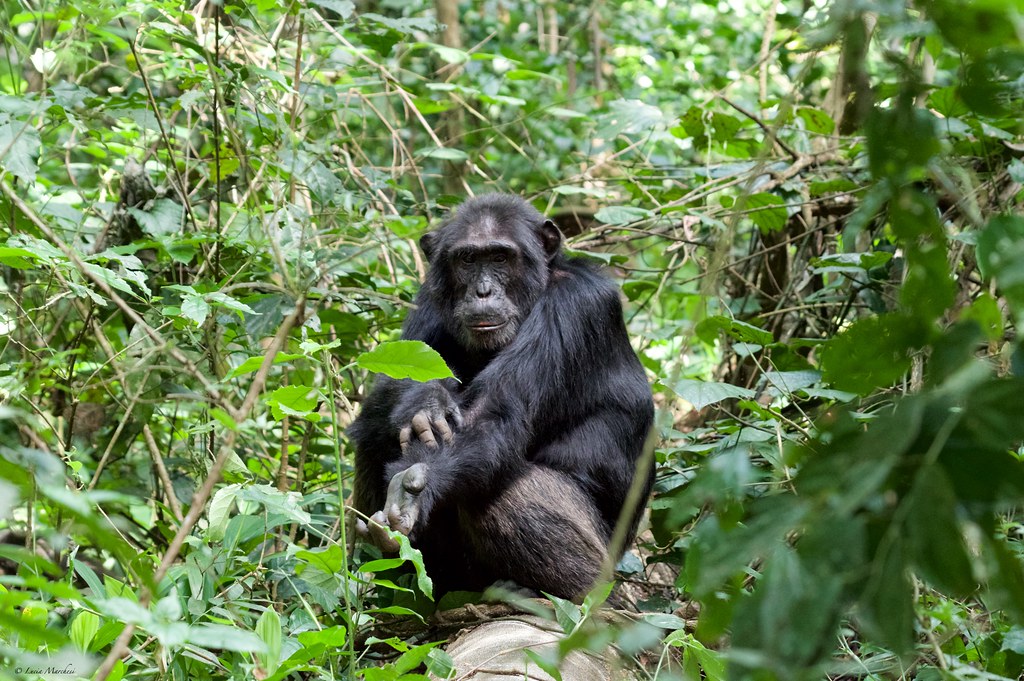
The star of the show is undoubtedly the Eastern Chimpanzee. With over 1,500 individuals living within the park boundaries, Kibale offers the most reliable chimpanzee tracking in the world. The habituated communities are used to the presence of humans, allowing for incredible close-up encounters as they groom, play, and occasionally hunt in the canopy above.
A Primate Paradise
Beyond the chimpanzees, Kibale is home to 12 other primate species. The rare L’Hoest’s monkey and East Africa’s largest population of the endangered red colobus are common sights. The black-and-white colobus, red-tailed monkey, blue monkey, grey-cheeked mangabey, Johnston’s mangabey, and several species of galagos (bushbabies) and pottos ensure that the forest is alive with movement at all times of the day and night.
The Bigodi Wetland Sanctuary
On the edge of the park lies the Bigodi Wetland Sanctuary, a community-run project that is a masterclass in sustainable tourism. A guided walk through these wetlands provides a chance to see up to eight species of primates and over 200 bird species, including the magnificent Great Blue Turaco. The sanctuary is also a vital corridor for wildlife moving in and out of the forest.
Biodiversity and Beyond
While primates are the main draw, Kibale’s biodiversity is staggering. The park is home to forest elephants—smaller and hairier than their savannah cousins—which move between Kibale and Queen Elizabeth National Park. Buffalos, giant forest hogs, and several species of antelope are also present, though often elusive in the thick undergrowth. For birders, the 375 recorded species, including the rare Green-breasted Pitta, make Kibale a world-class avian destination.
The Science of Chimpanzee Habituation
The habituation process in Kibale is a remarkable testament to human patience and scientific dedication. Unlike standard tracking, where you meet chimps already comfortable with humans, the habituation experience allows you to follow a community that is still ‘learning’ to trust researchers. This process typically takes between two to three years of daily contact. During this time, researchers follow the group from dawn till dusk, mimicking their sounds and movements to show that humans are not a threat. By participating in this, visitors get to see the complex social hierarchy of the chimpanzees in its rawest form—from the strategic maneuvers of the alpha males to the tender moments of grooming between mothers and infants.
The Bigodi Swamp Walk: A Community Success Story
Directly adjacent to Kibale is the Bigodi Wetland Sanctuary, which serves as a global model for community-based conservation. Managed by the Kibale Association for Rural and Environmental Development (KAFRED), the sanctuary was established to protect the Magombe Swamp while providing a sustainable income for local residents. The 4.5km guided walk takes you through high-canopy trees and thick papyrus reeds, where the air is filled with the calls of over 200 bird species. The ‘Bigodi’ name itself comes from the local ‘Kibagodi’ word meaning ‘to walk in a tired way,’ referring to the steep hills that locals had to climb to reach the swamp. Today, the walk is a highlight for many, offering a chance to see the elusive Sitatunga antelope and the magnificent Great Blue Turaco.
Beyond the Primates: A Forest of Giants
Kibale is more than just a primate haven; it is a complex ancient ecosystem that has stood for millennia. The park is home to over 350 species of trees, some of which reach heights of 50 meters and are several centuries old. These forest giants provide a multi-layered canopy that supports a vast array of life, from epiphytic orchids to rare forest ferns. The forest floor is a different world altogether, where ‘forest elephants’—distinct from their savannah counterparts by their smaller size and straighter tusks—move silently through the undergrowth. While these elephants are rarely seen, their presence is felt everywhere through the paths they carve and the fruits they disperse, making them the silent engineers of this tropical paradise.
A Birder’s Ultimate Checklist
For avian enthusiasts, Kibale is a high-stakes destination. The crown jewel for birders here is the Green-breasted Pitta, a beautiful but incredibly elusive bird that is best spotted during its breeding season. The park’s diverse habitats—ranging from primary rainforest to swamp and woodland—ensure a constant rotation of species throughout the year. You can expect to see various species of hornbills, kingfishers, and the strikingly colorful sunbirds. The expertise of the local guides in Kibale is second to none; many can identify hundreds of species by call alone, turning a walk through the dense forest into a masterclass in ornithology.