A Compact Ecosystem of Immense Beauty
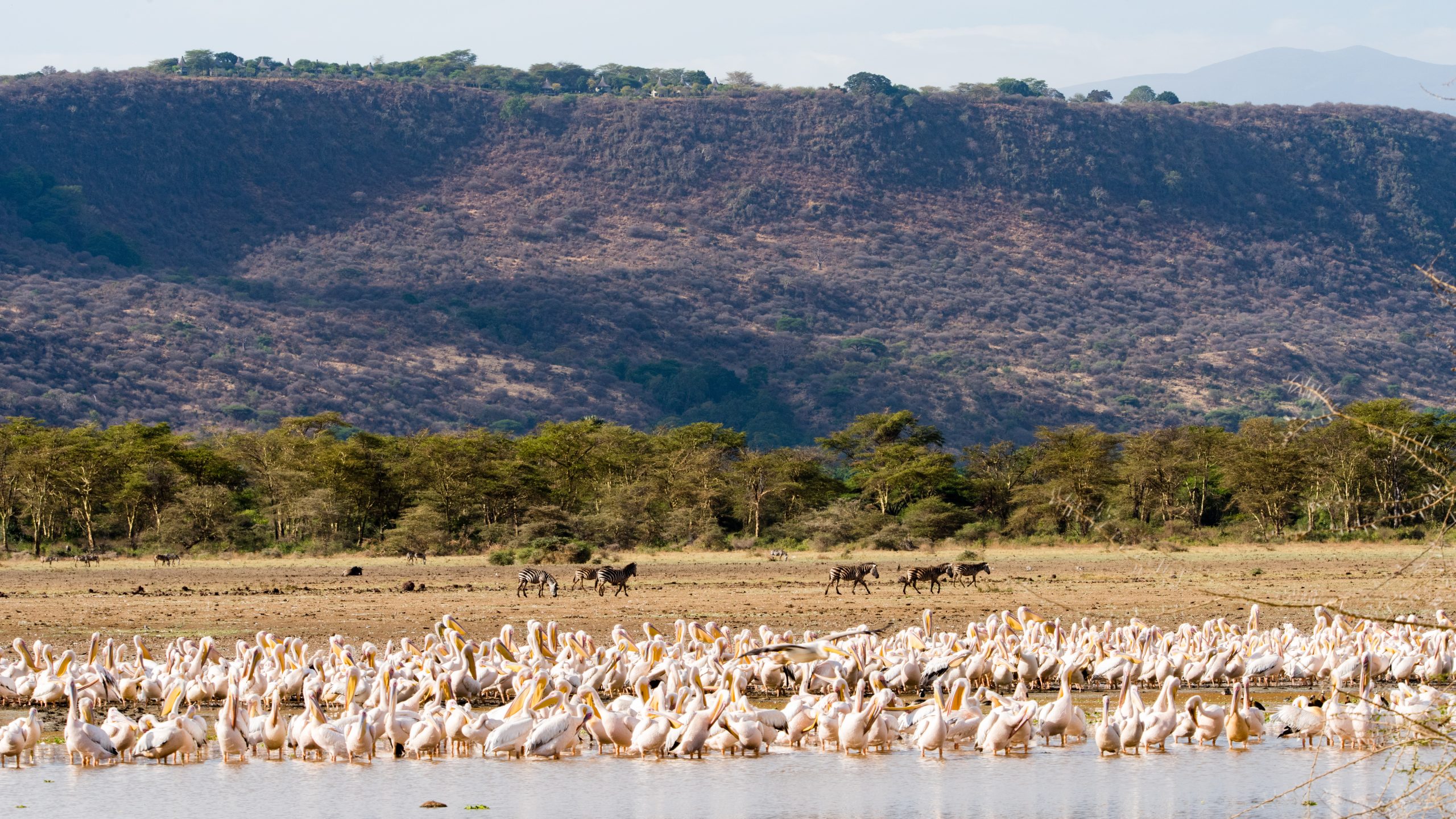
Lake Manyara National Park is a small but incredibly diverse park tucked beneath the 600-meter high golden cliffs of the Great Rift Valley escarpment. Ernest Hemingway once described it as the “loveliest place I had seen in Africa,” and its beauty remains just as striking today.
The park is dominated by its shallow alkaline lake, which can cover up to two-thirds of the park’s area during the wet season. The habitats range from dense groundwater forest and acacia woodland to open grasslands and steaming hot springs.
The Famous Tree-Climbing Lions
Lake Manyara is legendary for its tree-climbing lions. While this behavior is also seen in Ishasha (Uganda), Manyara was the first place where it was documented. The lions here habitually spend their days lounging in the branches of mahogany and acacia trees, likely to escape the heat of the ground and the irritation of biting insects.
A Primate and Bird Haven
The groundwater forest at the park entrance is home to massive troops of olive baboons—some numbering in the hundreds—and playful blue monkeys. For birders, the park is a paradise, with over 400 recorded species. The lake shore is often a shimmering sea of pink flamingos, while the forest is home to various hornbills, kingfishers, and raptors.
The Treetop Walkway and Hot Springs
Manyara offers unique experiences beyond the vehicle. The Treetop Walkway is one of the longest in Africa, allowing you to walk through the canopy. At the southern end of the park, the Maji Moto hot springs bubble from the earth at a near-boiling 60°C, a dramatic reminder of the tectonic power of the Rift Valley below.
The Enigma of the Tree-Climbing Lions
Lake Manyara National Park is the original home of the world-famous tree-climbing lions. While lions in other parts of Africa occasionally climb, the prides in Manyara have made it a habitual part of their daily lives. Visitors can often spot these apex predators lounging precariously on the wide limbs of mahogany or acacia trees, often with their legs dangling in the air. Scientists believe this behavior is an adaptation to escape the heat of the ground and the irritation of biting tsetse flies. Seeing a 200kg lion resting comfortably ten meters above the ground is a surreal highlight that challenges our standard understanding of lion behavior and provides a unique photographic opportunity that is found in very few other places on earth.
The Ground Water Forest: A Lush Sanctuary
The entrance to the park takes you through a spectacular ‘groundwater forest’—a lush, tropical environment that is fed by underground springs from the Rift Valley escarpment rather than rainfall. This ensures the forest remains vibrant and green even in the height of the dry season. This humid canopy is home to massive troops of olive baboons, sometimes numbering in the hundreds, and the playful blue monkeys. The forest floor is often alive with forest elephants and bushbucks, providing a cool, shaded introduction to the park’s wildlife before you emerge onto the open floodplains of the lake.
The Alkaline Lake and its Avian Treasures
Lake Manyara itself is a shallow alkaline lake that provides a vital habitat for thousands of waterbirds. Ernest Hemingway famously called it the ‘loveliest lake in Africa,’ and its shimmering waters certainly live up to the description. The lake shore is a constant hive of activity, with thousands of flamingos creating a pink fringe along the water’s edge. You can also see massive numbers of pelicans, cormorants, and storks. When the water levels are high, canoeing safaris allow you to get even closer to this avian spectacle, providing a tranquil and silent way to experience the park’s aquatic biodiversity.
The Maji Moto Hot Springs
At the southern end of the park, the landscape changes dramatically as you reach the Maji Moto (Hot Water) springs. These natural springs bubble from the earth at near-boiling temperatures (around 60°C), a powerful reminder of the geothermal activity that still lies beneath the Great Rift Valley. The springs create a unique micro-habitat of lush green grass and palms in an otherwise arid area, attracting various animals that come to graze and drink from the cooled runoff. The area around the springs is also a great place to see the park’s geological layers, as the golden cliffs of the escarpment rise sharply above the springs, providing a sense of the immense tectonic forces that created this beautiful valley.