The Serengeti is not just a national park; it is a landscape of the soul. The name ‘Serengeti’ is derived from the Maasai word ‘Siringet,’ which translates to ‘the place where the land runs on forever.’ Covering a staggering 14,750 square kilometers, this UNESCO World Heritage Site is the crown jewel of Tanzania’s northern safari circuit and arguably the most famous wildlife sanctuary in the world.
The Serengeti ecosystem is a vast mosaic of open grasslands, savanna, riverine forests, and woodlands. It is a place of immense scale and primal beauty, where the horizon seems to stretch into infinity under a sky that is constantly changing. For millions of years, this landscape has played host to one of the most remarkable natural spectacles on Earth: the Great Wildebeest Migration.
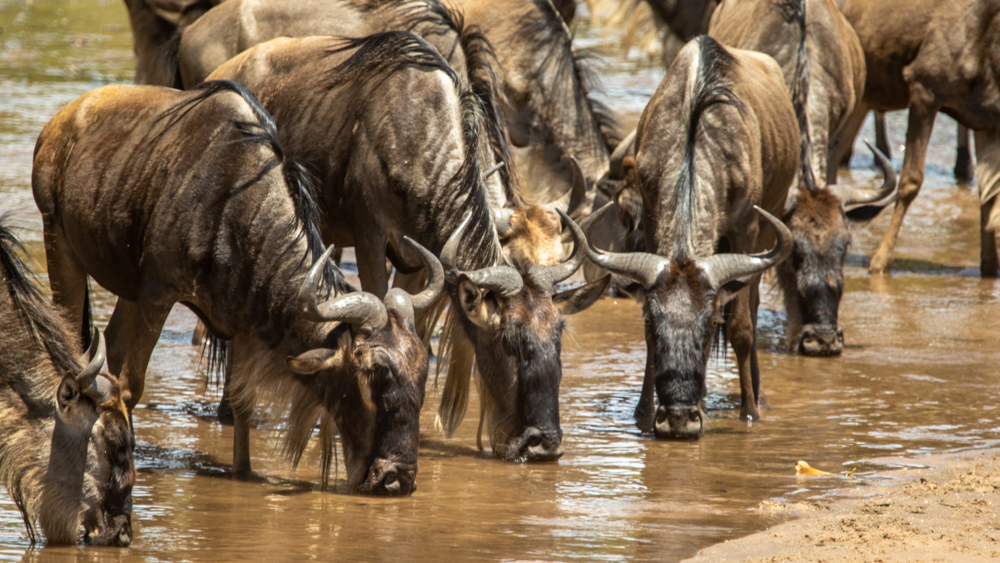
The Great Migration is the defining feature of the Serengeti. It is a circular, year-round journey undertaken by over 1.5 million wildebeest, accompanied by 200,000 zebras and 300,000 Thomson’s gazelles. This is not just a movement of animals; it is a desperate search for green pastures and water, driven by the rhythmic patterns of the seasons.
The most dramatic moments of the migration occur between July and October, when the herds face the treacherous crossing of the Mara River. Here, they must run a gauntlet of massive Nile crocodiles and wait for the precise moment to plunge into the water. In the southern Serengeti, around February, the calving season takes place, where approximately 8,000 wildebeest calves are born every single day. This abundance of life attracts an equally impressive concentration of predators, leading to intense wildlife action that is a photographer’s dream.
While the migration is the main draw, the Serengeti is home to a permanent population of wildlife that is unmatched in its variety and density. It is one of the best places in Africa to see the ‘Big Five’: Lion, Leopard, Elephant, Buffalo, and the rare Black Rhino. The park is estimated to host over 3,000 lions, one of the largest populations on the continent.
The open plains of the Serengeti are also prime hunting grounds for cheetahs, who use their incredible speed to chase down gazelles. Leopards are frequently spotted draped over the branches of acacia trees, particularly in the Seronera Valley. Spotted hyenas, jackals, and serval cats add to the predatory mix, while the rivers are filled with hippos and some of the largest crocodiles in Africa.
The Serengeti’s landscape is punctuated by ‘Kopjes’—ancient granite rock formations that rise like islands from the sea of grass. These Kopjes, such as the famous Simba Kopjes and Moru Kopjes, serve as vital vantage points for predators and nesting sites for birds. Lions are often seen lounging on the warm rocks, surveying the plains for their next meal.
The park is also a birdwatcher’s paradise, with over 500 species recorded. From the massive Kori Bustard—the world’s heaviest flying bird—to the colorful lilac-breasted roller and a variety of eagles and vultures, the avian diversity is staggering. The Serengeti is also home to several endemic species, such as the Grey-breasted Spurfowl and the Fischer’s Lovebird.
The Serengeti has a distinct dry season from June to October, which is generally considered the best time for wildlife viewing as animals congregate around water sources. During this time, the grass is short, making it easier to spot predators. The short rains occur in November and December, followed by a short dry spell in January and February.
The long rains fall from March to May, transforming the landscape into a lush, green paradise. This is the ‘Green Season,’ a time of renewal and birth. While the long grass can make spotting animals more challenging, the scenery is spectacular, the birdlife is at its peak, and there are fewer tourists, offering a more intimate and exclusive safari experience.
One of the most iconic ways to experience the Serengeti is from above. A hot air balloon safari at dawn offers a perspective that is impossible to get from the ground. As the sun rises over the horizon, you float silently over the plains, watching the herds move below and the predators begin their morning hunt. The flight is typically followed by a champagne bush breakfast under an acacia tree, creating a memory that will last a lifetime.
The Serengeti is surrounded by several game reserves and conservation areas, including the Ngorongoro Conservation Area and the Maasai Mara in Kenya. This interconnected network is crucial for the survival of the migration. The Maasai people, who have lived in the region for centuries, continue to coexist with the wildlife in some of the surrounding areas. Cultural visits to Maasai villages provide an insight into their nomadic lifestyle, their traditional dress, and their deep connection to the land.
Modern conservation efforts in the Serengeti focus on anti-poaching, human-wildlife conflict mitigation, and sustainable tourism management. The Serengeti Ecosystem is a fragile one, and its protection is a global priority. Staying in eco-friendly lodges and tented camps helps support these initiatives and ensures that the Serengeti remains a wild and vibrant landscape for generations to come.
The Serengeti is a place of wonder, a place where the cycles of life and death play out on a grand scale every single day. It is the ultimate expression of wild Africa, a landscape that humbles and inspires in equal measure. To stand on its endless plains is to feel the heartbeat of the natural world.