The Vast and Untamed Wilderness
Tsavo East is one of the oldest and largest national parks in Kenya. It is a land of vast, open plains, ancient lava flows, and the red dust that gives its inhabitants their unique appearance. It is significantly flatter and drier than its western counterpart, offering a sense of immense, uncrowded space that is increasingly rare in modern Africa.
The park is dominated by the Yatta Plateau—the world’s longest lava flow—and the Galana River, which provides a life-giving vein through the arid landscape. It is a classic “Big Game” destination, famous for its massive herds of elephants and the “Man-Eaters of Tsavo” lions of historical legend.
The Iconic “Red Elephants”
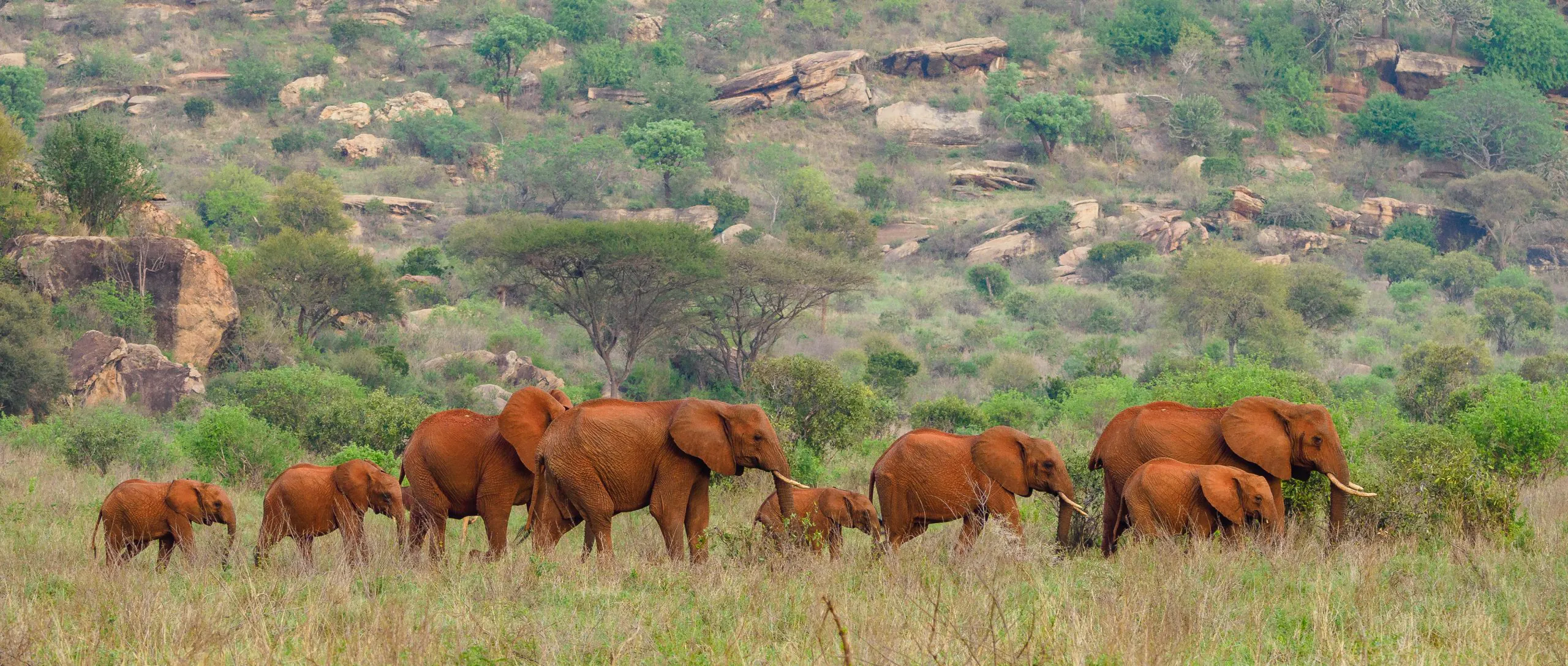
Tsavo East is most famous for its “Red Elephants.” The elephants here are not actually a different species, but they habitually bathe in the park’s iron-rich red volcanic soil. This coating of dust provides them with protection against the sun and insects and gives them a striking, rusty-red appearance that is found nowhere else in the world.
Lugard Falls and the Galana River
The Galana River is the park’s focal point. At Lugard Falls, the river is forced through a series of narrow rock channels, creating a dramatic display of churning water. The pools below the falls are home to massive crocodiles and hippos, while the riverine forest attracts a high diversity of birdlife and eland antelopes.
A Haven for Specialists
Because of its arid nature, Tsavo East is home to several specialized species like the Lesser Kudu, Gerenuk (the giraffe-necked antelope), and the Hirola (Hunter’s Hartebeest). The park is a vital corridor for bird migration, and over 500 species have been recorded, including many raptors that thrive on the thermal currents above the plateau.
The Red Elephants of the Yatta Plateau
The most iconic image of Tsavo East is its ‘Red Elephants.’ These massive animals are famous for their rusty, brick-red appearance, a result of their habit of dusting and wallowing in the park’s iron-rich red volcanic soil. This red coating serves a vital purpose, acting as a natural sunscreen and an insect repellent. Seeing a herd of these red giants moving against the backdrop of the golden savannah is a highlight of any Kenyan safari. The elephants of Tsavo are also known for their incredible resilience, having survived the intense droughts and poaching pressures of the past to become one of the most stable and well-protected populations in East Africa today.
Lugard Falls and the Galana River
The Galana River is the lifeblood of Tsavo East, carving its way through the arid landscape and supporting a lush ribbon of forest along its banks. At Lugard Falls, named after the British explorer Frederick Lugard, the river encounters a series of narrow, rock-hewn channels. The sheer power of the water as it churns through these gaps is a spectacular sight. Below the falls, the river forms deep pools that are home to some of the largest Nile crocodiles in Kenya. This area is a magnet for wildlife, particularly in the dry season, as animals from the vast hinterland travel for miles to reach the permanent water of the Galana.
Mudanda Rock: The Elephant’s Lookout
Mudanda Rock is a massive, 1.5km long inselberg that rises dramatically from the surrounding plains. This geological formation is not just a landmark but a vital part of the park’s water system. The rock acts as a natural catchment area, funnelling rainwater into a large dam at its base. During the dry season, this dam is one of the most reliable water sources in the area, attracting hundreds of elephants, buffaloes, and antelopes. Visitors can climb to the top of the rock via a guided trail, which offers a 360-degree panoramic view of the vast Tsavo wilderness. It is one of the best spots in Africa for ‘armchair’ wildlife viewing, where you can sit and watch the drama of the wild unfold below you.
A Haven for Arid-Zone Specialists
Because of its hot and dry climate, Tsavo East is home to several specialized species that are rare or absent in the wetter parks of the south. The Lesser Kudu, with its beautiful spiral horns and white stripes, is a shy resident of the thickets. The Gerenuk, also known as the ‘giraffe-necked antelope,’ is a fascinating sight as it stands on its hind legs to reach the high branches of acacia trees. The park is also a vital stronghold for the Hirola, or Hunter’s Hartebeest, one of the rarest antelopes in the world. For the dedicated wildlife enthusiast, Tsavo East offers the chance to complete their ‘African checklist’ with these unique and highly adapted species.