The Arid Heart of Northern Kenya
Samburu National Reserve is a world away from the lush plains of the south. Located in the semi-arid northern region of Kenya, it is a landscape of stark beauty, dominated by the Ewaso Ng’iro River and the dramatic silhouette of Mount Ololokwe. It is famous for its unique “Special Five”—species that are adapted to the dry conditions and are found nowhere else in southern Kenya.
The reserve’s smaller size and the concentration of wildlife along the river ensure a very high-quality safari experience. It is much less crowded than the Masai Mara, offering a sense of rugged wilderness and authentic cultural immersion.
The Samburu “Special Five”
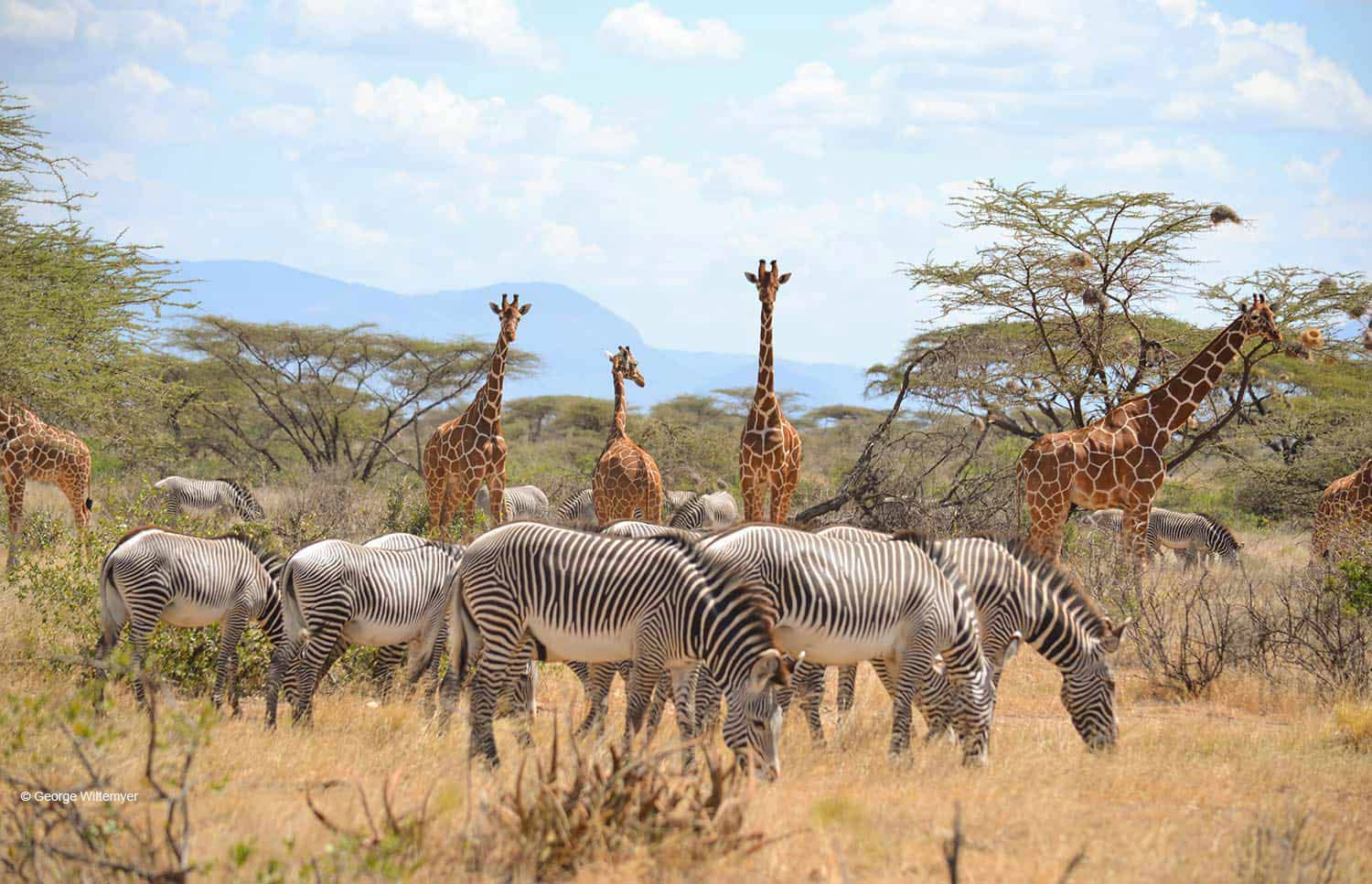
Samburu is the only place where you can see all of the “Special Five” in a single morning game drive: the Grevy’s Zebra (with its narrow stripes), the Reticulated Giraffe (with its striking geometric patterns), the Somali Ostrich (with its blue neck), the Beisa Oryx, and the Gerenuk (the antelope that stands on its hind legs to eat from trees).
The Ewaso Ng’iro River
The name means “River of Brown Water” in the local language. This permanent river is the reason for the reserve’s existence. In the heat of the day, massive herds of elephants gather to bathe and drink, while leopards and lions lie in wait in the thick palm forests that line the banks. It is one of the best places in Kenya for predator action.
Samburu Cultural Heritage
The Samburu people are cousins to the Maasai and have a similarly rich warrior culture. Known for their intricate beadwork and colorful dress, they are a vital part of the conservation efforts in the region. A visit to a Samburu village provides a deep understanding of how they have thrived in this harsh environment for centuries, maintaining their traditions and their cattle-centric way of life.
The ‘Special Five’ of the Northern Frontier
Samburu is uniquely famous for its ‘Special Five’—a collection of rare wildlife species that have adapted to the harsh, semi-arid conditions of Northern Kenya and are not found in the more famous parks of the south. These include the Grevy’s Zebra, which is much larger and more finely striped than the common plains zebra; the Reticulated Giraffe, with its striking and beautiful geometric patterns; the Somali Ostrich, distinguished by its blue neck and legs; the Beisa Oryx with its long, straight horns; and the Gerenuk, the ‘giraffe-necked’ antelope that has the incredible ability to stand on its hind legs to reach the high branches of acacia trees. Seeing all five in a single game drive is the ‘holy grail’ for many safari enthusiasts visiting the north.
The Ewaso Ng’iro: A Lifeblood in the Dust
The Ewaso Ng’iro River is the heart and soul of Samburu. Its name means ‘River of Brown Water’ in the local language, referring to the silt it carries from the Kenyan highlands. In a land that is often parched and dusty, the river provides a permanent source of life. During the dry season, the river banks are the stage for incredible wildlife drama. Massive herds of elephants, sometimes numbering in the hundreds, gather to bathe and play in the water. Predators like lions and leopards stay close to the riverine forests, lying in wait for the antelopes that must come to drink. The river’s lush banks, lined with doum palms and acacias, provide a stark and beautiful contrast to the surrounding desert landscape.
Samburu Culture: Warriors of the North
The Samburu people are the traditional guardians of this rugged land. Cousins to the Maasai, they have maintained a vibrant and ancient warrior culture that is deeply tied to their livestock and the environment. Known for their intricate and colorful beadwork, traditional songs, and the ‘jumping dance’ of the warriors, a visit to a Samburu Manyatta (village) is a profound cultural experience. Unlike more commercialized cultural visits elsewhere, the interactions in Samburu feel authentic and respectful, providing a deep understanding of how these resilient people have thrived in one of the most challenging environments on Earth. Their knowledge of the land and its wildlife is peerless, and many Samburu now work as expert guides and trackers in the reserve.
Mount Ololokwe: The Sacred Sentinel
The skyline of Samburu is dominated by the dramatic, flat-topped silhouette of Mount Ololokwe. This massive inselberg is sacred to the Samburu people, who believe it is the home of their gods. For adventurous travelers, a guided hike to the summit offers some of the most spectacular views in East Africa. The climb takes you through ancient forests and onto a high plateau where you can look out over the vast, shimmering plains of the Northern Frontier District. From the top, the true scale of the Samburu ecosystem becomes clear, and the sense of absolute silence and isolation is a refreshing contrast to the modern world below. It is a place of profound peace and spiritual power.