The Soul of Southern Tanzania
Nyerere National Park, formerly the northern part of the Selous Game Reserve, is the largest national park in Tanzania and one of the largest in Africa. It is a vast, wild, and relatively untouched wilderness that offers a starkly different experience from the busier northern circuit parks.
The park is defined by the mighty Rufiji River, which carves a network of lakes, lagoons and channels as it flows toward the Indian Ocean. This water system is the lifeblood of the park, creating a lush, verdant habitat that supports an incredible diversity of life.
A Stronghold for African Wild Dogs
Nyerere NP is one of the few places left in Africa where you have a genuine chance of seeing the endangered African Wild Dog (Painted Wolf). The park hosts one of the largest remaining populations on the continent, and watching these social and highly efficient hunters in action is a highlight for any wildlife lover.
The Rufiji River Boat Safari
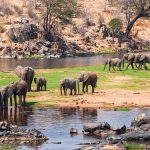
Unlike many other Tanzanian parks, Nyerere allows boat safaris. Drifting silently along the river and its associated lakes (like Lake Manze and Lake Tagalala) allows for incredibly close-up encounters with hippos and crocodiles. It is also a fantastic way to see elephants and buffaloes as they come to the water to drink and bathe.
A True “Off the Beaten Path” Experience
Because it is located in the south, Nyerere receives a fraction of the visitors that the Serengeti does. This means you can enjoy major sightings with no other vehicles in sight. The park is also one of the best places in Tanzania for walking safaris and “fly-camping,” providing a raw and intimate connection with the African bush.
The Rufiji River: A Pulse of Life
The Rufiji River is the heart and soul of Nyerere National Park. As it winds its way toward the Indian Ocean, it creates a complex network of channels, lagoons, and five major lakes (Tagalala, Manze, Nzelekela, Siwandu, and Mzizimia). This water system is the largest in East Africa and provides a permanent life-support system for a staggering diversity of wildlife. Unlike the dry savannahs of the north, Nyerere is a lush, aquatic world. Boat safaris on the Rufiji offer a unique perspective, allowing you to drift silently within meters of massive pods of hippos and huge Nile crocodiles. In the dry season, the riverbanks become the primary stage for wildlife action as elephants and buffaloes travel miles to reach the cooling waters, providing some of the best riverine game viewing in Africa.
Africa’s Largest Wild Dog Stronghold
Nyerere National Park is one of the few remaining places on earth where you have a genuine chance of seeing the endangered African Wild Dog (Painted Wolf). The park’s vast, uncrowded wilderness is the perfect habitat for these social and highly efficient hunters. With territories that can span hundreds of square kilometers, the wild dogs of Nyerere are free to roam as they have for millennia. Watching a pack coordinate a hunt or interact at a den site is a rare and profound experience. The park’s commitment to protecting these apex predators is vital for the species’ survival, and Nyerere remains the best place in Tanzania to witness the complex social lives and incredible hunting prowess of Africa’s most successful predator.
Selous Legacy and Conservation Success
Nyerere National Park was created in 2019 from the northern sector of the legendary Selous Game Reserve, which was originally established in 1922. The new status as a National Park has brought increased protection and investment in infrastructure, turning it into one of the most well-managed wilderness areas in the south. The park is named after Julius Nyerere, the ‘Father of the Nation’ and Tanzania’s first president, who was a passionate advocate for wildlife conservation. Today, the park is a model for ‘low-impact’ tourism, where a small number of high-quality lodges ensure that the wilderness remains pristine and that the wildlife is not pressured by large numbers of vehicles, providing a ‘private safari’ feel even in a public park.
Walking and Fly-Camping: The Ultimate Connection
For those who want to experience the African bush in its rawest form, Nyerere is the premier destination for walking safaris and fly-camping. Guided by expert pro-guides and armed rangers, you leave the vehicle behind and step into the world of the animals. You learn to read the stories written in the dust—the tracks of a leopard, the warning calls of a bird, and the scent of the morning rain. Fly-camping takes this a step further; you hike to a remote, temporary camp and sleep under a simple mosquito net beneath a canopy of stars. With only the sound of the wind and the distant roar of a lion, it is a profound and humbling experience that provides a level of connection to nature that is impossible to achieve in a standard lodge-based safari.