Akagera National Park: The Grand Revival of Rwanda’s Wild Savanna
Akagera National Park is a story of dramatic decline and even more spectacular recovery. Spanning approximately 1,122 square kilometers in eastern Rwanda, along the border with Tanzania, Akagera is a diverse mosaic of rolling hills, low-lying plains, and a vast network of lakes and papyrus swamps. It is the largest protected wetland in Central Africa and Rwanda’s only savanna-based national park, offering a stark and beautiful contrast to the rainforests of the west.
The park was founded in 1934 and was once a thriving wilderness. However, the tragic events of the 1990s led to massive human encroachment and poaching, which nearly decimated the park’s wildlife populations. For years, Akagera was a park in name only. But since 2010, through a landmark partnership between the Rwanda Development Board and the non-profit organization African Parks, Akagera has undergone one of the most successful conservation turnarounds in history. Today, it is once again a fully functioning ecosystem and a premier destination for those seeking a classic African safari experience.
The Return of the Big Five
The crown jewel of Akagera’s recovery is the restoration of the ‘Big Five’—lions, leopards, elephants, buffaloes, and rhinoceroses. In 2015, seven lions were reintroduced from South Africa, the first time the species had been seen in the park in 15 years. Their population has since thrived and expanded. In 2017, a historic translocation saw the return of 18 eastern black rhinos, followed by more individuals in 2019. Seeing these prehistoric-looking creatures grazing on the plains of Akagera is a testament to the power of dedicated conservation work. Elephants and buffaloes, which managed to survive the park’s darkest years, are now seen in large, healthy herds, while leopards remain elusive but are increasingly spotted on night game drives.
The Northern Plains: A Wildlife Spectacle
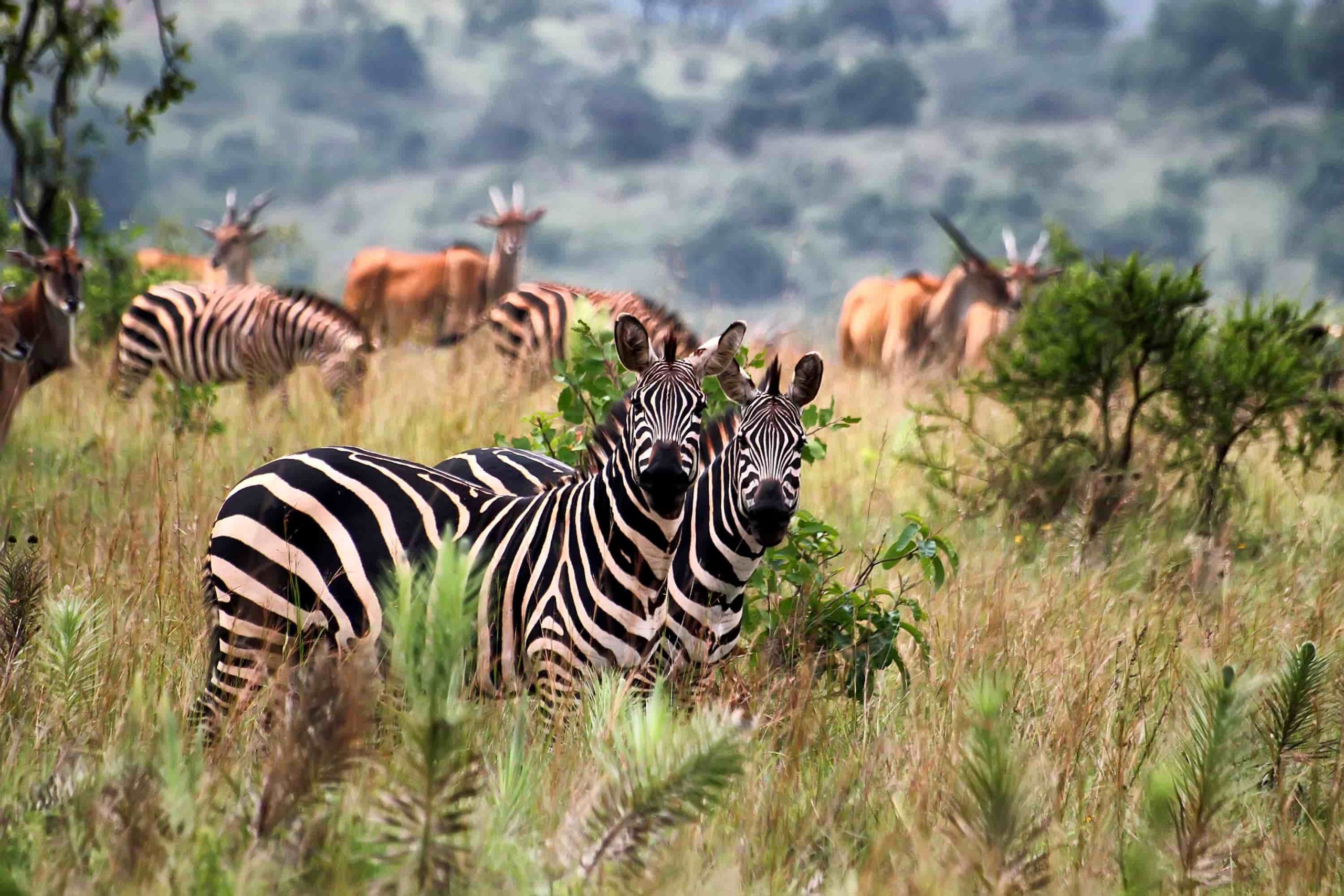
The northern part of the park is characterized by open savanna grasslands, reminiscent of the great plains of the Serengeti or Masai Mara. Here, game drives reveal a constant parade of wildlife. Large herds of plains zebras, topis, and impalas are a common sight. You might also spot the Masai giraffe, which was introduced to the park in the 1980s and has since become a staple of the Akagera landscape. The plains are also home to various antelope species, including the eland—the largest antelope in the world—and the waterbuck, which stays close to the park’s many lakes.
Water Safaris on Lake Ihema
What sets Akagera apart from many other savanna parks is its abundance of water. The park contains ten lakes, the largest being Lake Ihema. A boat safari on Lake Ihema is an essential Akagera experience. As you cruise along the shoreline, you will encounter massive Nile crocodiles basking in the sun and large pods of hippos surfacing with a grunt. The lake is also a sanctuary for waterbirds, with herons, egrets, and cormorants frequently seen. The sight of a majestic African fish eagle perched on a dead tree, scanning the water for its next meal, is a classic Akagera image.
A Haven for Birdwatchers
With over 480 recorded species, Akagera is a world-class birding destination. The park’s varied habitats—savanna, woodland, wetland, and forest—mean that a huge range of species can be found within a small area. The papyrus swamps are particularly important, providing habitat for rare and highly sought-after species like the papyrus gonolek and the white-winged swamp warbler. For many birders, the ultimate prize is the Shoebill Stork, an prehistoric-looking bird that is occasionally seen in the deeper marshes. The park is also a vital corridor for migratory birds, making every visit a potential for new and exciting sightings.
Night Game Drives: Discovering the Secretive Side of the Savanna
Akagera is one of the few parks in Rwanda where you can experience a night game drive. As the sun sets and the savanna is bathed in the light of the moon and stars, a different cast of characters emerges. Equipped with powerful spotlights and accompanied by an expert guide, you search for nocturnal creatures that are rarely seen during the day. This is the best time to look for leopards, hyenas, and servals on the hunt. You might also spot smaller predators like the white-tailed mongoose, various species of owls, and the charming bushbaby leaping through the acacia trees.
Conservation Technology and Community Engagement
The success of Akagera is built on a foundation of cutting-edge technology and deep community involvement. The park uses a sophisticated ‘Domain Awareness System’ that integrates data from satellite collars, ranger patrols, and digital sensors to monitor wildlife and detect potential threats in real-time. Anti-poaching efforts are supported by a dedicated K9 unit, whose tracking dogs have been instrumental in securing the park. Equally important is the park’s relationship with its human neighbors. African Parks invests heavily in community development, supporting sustainable agriculture, education, and health initiatives. By ensuring that the local people benefit directly from the park’s existence, Akagera has turned former poachers into dedicated protectors of the wilderness.
Logistics and Visitor Experience
Akagera is located approximately two and a half hours east of Kigali, making it the most accessible of Rwanda’s national parks. The park offers a range of accommodation options to suit different budgets. For those seeking luxury, Magashi Camp offers an exclusive experience in the park’s northern wilderness. Akagera Game Lodge provides a more traditional hotel experience with stunning views over Lake Ihema, while several well-maintained campsites offer a more immersive, back-to-nature experience. The best time to visit for wildlife viewing is during the dry season (June to September), when animals congregate around the lakes and the grass is shorter, making them easier to spot.
Akagera National Park is more than just a place to see animals; it is a symbol of Rwanda’s resilience and its commitment to a green future. It is a place where the sounds of the wild—the roar of a lion, the trumpeting of an elephant, the splash of a hippo—have returned to stay. As you drive through its diverse landscapes, you are witnessing a miracle in progress, a testament to what can be achieved when humanity decides to give nature a second chance. Akagera is a true wild treasure, a place of endless discovery and profound hope.